Pontiac Adopts Broad Source of Income and Other Fair Housing Protections
Pontiac’s Private Right of Action Provision
a Model for Other Jurisdictions
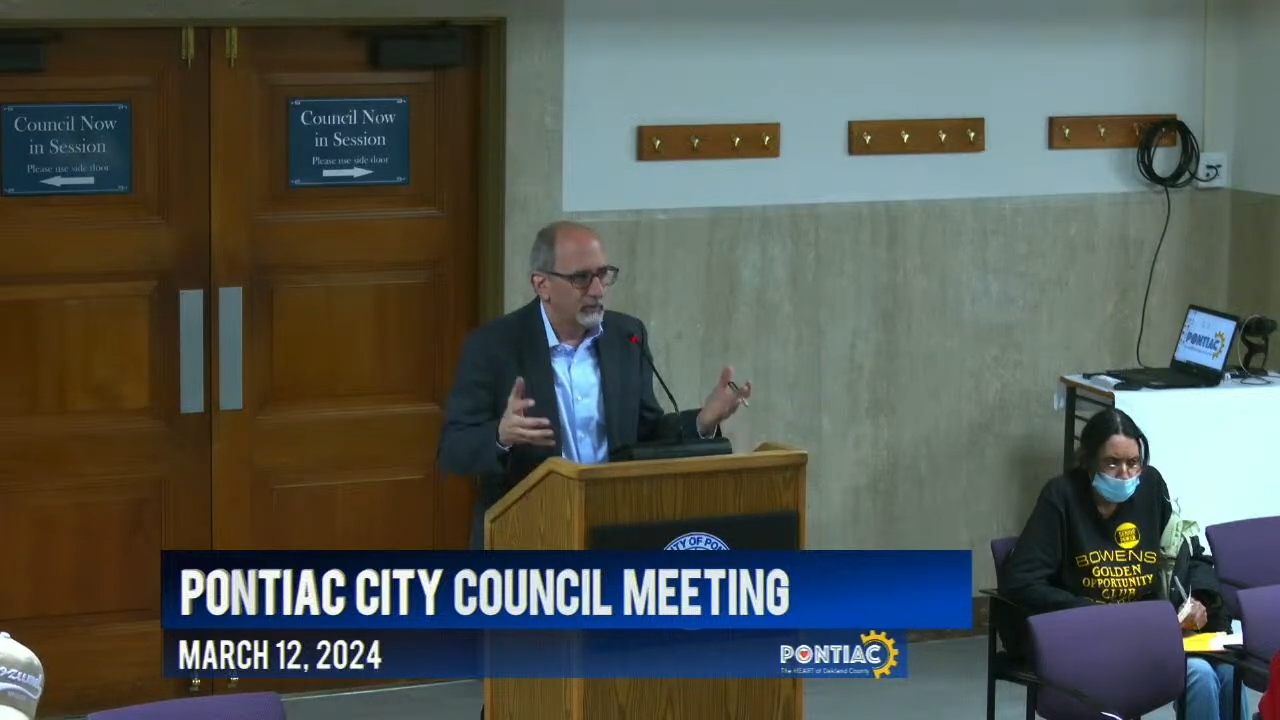
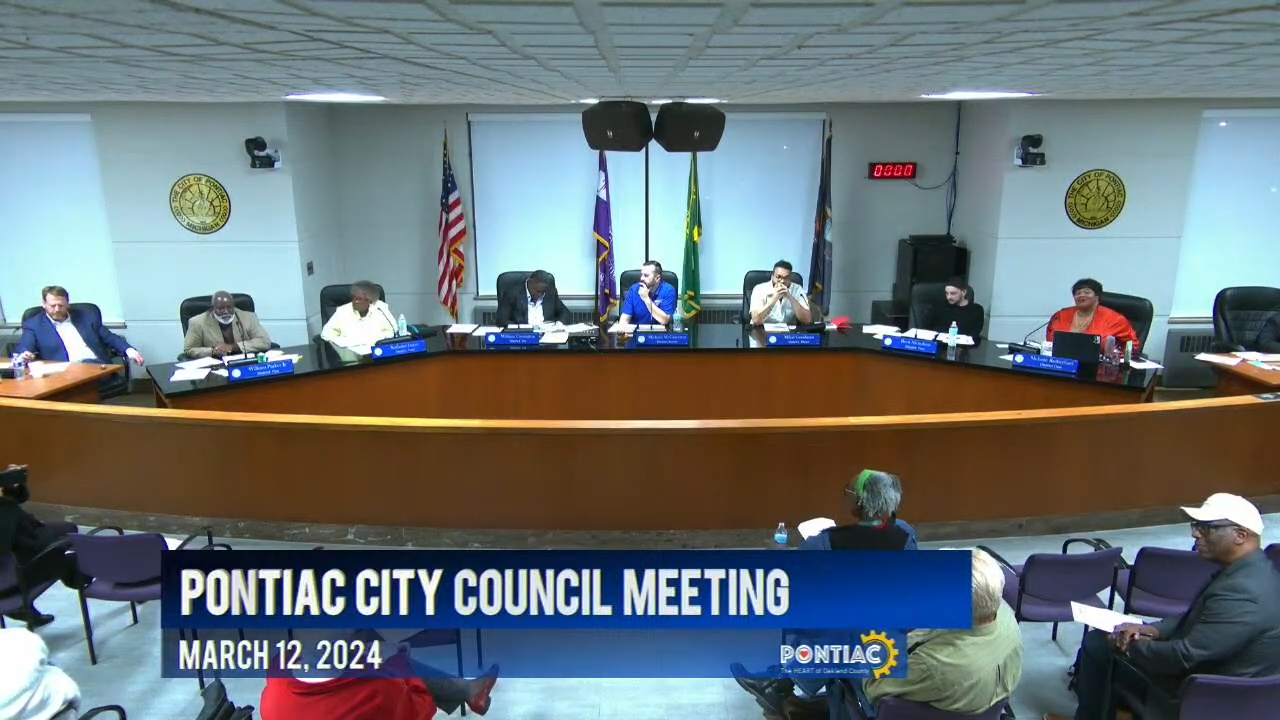
The Pontiac City Council, on March 12, 2023, adopted a broad source of income (SOI) and fair housing ordinance proposed by Councilmember Mikal Goodman, amending Chapter 78 – Human Relations, Article III, Divisions 1 & 2, of the Pontiac Municipal Code.
The ordinance prohibits discrimination against the following 16 protected classes: actual or perceived color, race, religion or creed, sex, gender identity or expression, sexual orientation, national origin, genotype, age, marital status, familial status, medical condition, disability, height, weight, or source of lawful income.
Section 78-57(33) of the ordinance defines “Source of Lawful Income” to include “[a]any lawful source of money paid directly or indirectly on behalf of an individual or family”, including Housing Choice Vouchers, emergency rental assistance, and public assistance. The SOI definition also includes VA and FHA loans.
Section 78-59(3) addresses discrimination against housing applicants based on criminal record:
“Conviction Record. History of criminal conviction may be considered in housing decisions, although arrest with no conviction may not be considered. An outright ban on prospective tenants with a criminal background is prohibited. Landlords must carefully consider, on a case-by-case basis, the nature and severity of the crime, the age of the individual at the time of the crime, whether there have been repeat offenses, whether the individual maintained a good tenant history before or after the conviction, evidence of rehabilitation efforts, and whether the crime for which the individual was convicted may pose a demonstrable risk to the health, safety or welfare of other residents or persons (which would include manufacturing or distributing illegal drugs) or to property.”
Two items stand out in this ordinance. First, Pontiac’s City Council adopted a private right of action provision that confers standing on victims of housing discrimination to obtain injunctive relief and compensatory damages. Cities are permitted to create private right of actions under Michigan law in the field of civil rights. J.F. Cavanaugh & Co. v. City of Detroit, 126 Mich. App. 627, 635-37; 337 NW2d 605 (1983)(“No express provision for pre-emption of the field appears in the Elliott-Larsen act. . . . We conclude that municipalities are not pre-empted from enacting laws in the field of civil rights.”). The private right of action provision was adopted as an alternative to an earlier, less cost- and resource-effective enforcement approach that would have imposed on the City Attorney the responsibility for receiving SOI complaints, investigating allegations, and taking enforcement action ($500 civil fines). This provision was removed and replaced with the following private right of action provision, adopted from New York City's Local Law No. 40 of 2016, that permits victims of housing discrimination victims, as well as the Fair Housing Center, to commence enforcement proceedings to remedy violations:
"78-65 Right to Private Action.
. . .
"(2) To the extent allowed by law, an individual who is the victim of discriminatory action in violation of this ordinance may bring a civil action for appropriate injunctive relief or damages or both against the person(s) who acted in violation of this chapter.
"(3) 'Person aggrieved' includes a person whose right created, granted or protected by Article III, Division 2, Chapter 78, is violated by a covered entity directly or through conduct of the covered entity to which the person’s agent or employee is subjected while the agent or employee was acting, or as a result of the agent or employee having acted, within the scope of the agency or employment relationship. For purposes of this subdivision, an agent or employee's protected status is imputed to that person's principal or employer when the agent or employee acts within the scope of the agency or employment relationship. It is irrelevant whether or not the covered entity knows of the agency or employment relationship.
"(4) A person is aggrieved even if that person's only injury is the deprivation of a right granted or protected by Article III, Division 2, Chapter 78.
"(5) As used in subsection (2), 'damages' means damages for injury or loss caused by each violation of this chapter, including reasonable attorney fees."
Second, a proposed amendment to the ordinance—drawn from pending SOI legislation in the Michigan legislature—would have restricted coverage to owners more than 5 dwellings in Pontiac: "Exemptions . . . The sale or rental of any dwelling by an owner, provided the following condition is met, the person owning the dwelling does not own or have any interest in more than five (5) dwellings within the City at that time." This novel 5-dwelling exemption is not found in the Michigan Elliot-Larsen Civil Rights Act, MCL § 37.2503 (excluding from coverage "[t]he rental of a housing accommodation in a building that contains housing accommodations for not more than 2 families living independently of each other if the owner or a member of the owner's immediate family resides in 1 of the housing accommodations, or to the rental of a room or rooms in a single family dwelling by a person if the lessor or a member of the lessor's immediate family resides in the dwelling"). Nor is such an exemption found in the Michigan Persons With Disabilities Civil Rights Act, MCL § 37.1503 (same).
The Center, in a prior post, explained why such exemptions exclude the majority of rental properties from SOI coverage. Further, these exemptions are archaic, originating prior to the holding in Jones v. Alfred H. Mayer Co., 392 U.S. 409 (1968)—in which the Supreme Court held that the nation's first fair housing statute, 42 U.S.C. § 1982, reached purely private housing transactions without any exemptions. Id. at 415 (“§ 1982 contains none of the exemptions that Congress included in the [Fair Housing Act].”). Including such exemptions in state civil rights statutes and local fair housing ordinances give landlords the false understanding that discriminatory conduct is exempt from fair housing coverage.
From a practical standpoint, the number of dwellings exemption--even if less that 5--is unworkable. As Council President Michael McGuinness and Councilmember Mikal Goodman explained at the council meeting (YouTube: Pontiac City Council 3-12-24, at 3:43:32 to 3:55:32) title to rental properties due to investment, tax, and liability purposes are commonly held by separate limited liability companies or other business entities, making it difficult to show that the owners of Pontiac rental properties will reach the more than 5 rental threshold for SOI coverage. Others may place title into separate entities to avoid SOI coverage. The Center, in turn, noted that establishing common ownership across numerous rental properties is the kind of issue that would breed protracted litigation, further impairing SOI coverage.
The Pontiac City Council, by a 6-0 vote, appropriately removed this exemption. As a result, SOI and other fair housing protections in Pontiac apply to all properties regardless of the number of properties a respondent owns. The result of Pontiac City Council's actions will be to increase housing opportunities--and reduce eviction rates--for low-income families with vouchers. Hopefully, Pontiac’s SOI/fair housing ordinance will be a model and springboard for the adoption of not only other fair housing ordinances in Michigan, but a model for the Michigan legislature’s pending SOI bills.
Notably, this is just the most recent in a series of important housing related actions by Councilmember Goodman, along with Councilmembers Mike McGuinness, William A. Carrington, Melanie Rutherford, Brett Nicholson, Kathlee James, and William Parker, Jr., along with Mayor Tim Greimel. These efforts include the adoption of an ordinance requiring owners of rental properties to obtain a valid certificate of compliance. The ordinance permits tenants of non-complaint owners to pay their rent into an escrow account with the City of Pontiac until the owner obtains a certificate of compliance and/or properly registers the rental property. Should an owner fail in 30 days to obtain a certificate of compliance and/or register the rental property, the rent in the escrow account shall be paid to the tenant. Pontiac Municipal Code, Chapter 22, Building and Regulations, Article VI Housing Code, § 22-806.
The Center participated with the City of Pontiac in three town halls related to the rental registration ordinance. Oakland County Times, Escrow Ordinance and Renters Rights a Focus in Uplifting Pontiac; Click on Detroit, City of Pontiac educates tenants about their rights. As a result of this ordinance, the number of unregistered rental properties in approximately one year has reduced from approximately 7,000 to 1,000, with actions being undertaken as to the remaining unregistered rental properties.
Additionally, with the assistance of Congresswoman Haley Stevens, Pontiac has obtained over $4 million in federal funding for Pontiac’s Martin Luther King, Jr. Boulevard Bridge replacement. This is the largest federal grant amount awarded.
Further efforts are planned. For example, Pontiac City Council and Mayor Greimel have contracted with McKenna Associates, Inc. for a Housing Study and Needs Assessment.
The Center looks forward to serving Pontiac with respect to its SOI/fair housing ordinance and the City’s other significant housing related efforts.