Elliott-Larsen Civil Rights Act Expanded to Include Sexual Orientation and Gender Identity or Expression as Protected Class Categories

Steve Tomkowiak • March 18, 2023

Expanded Protections in the Areas of Housing, Employment, Public Accommodations, and Education

For decades, the Michigan Elliot-Larsen Civil Rights Act (ELCRA) prohibited discrimination in employment, housing, public accommodations, and education based on religion, race, color, national origin, age, sex, height, weight, familial status, or marital status. The Michigan Persons With Disabilities Civil Rights Act provides separate protection for persons with disabilities.


Questions have arisen in recent years regarding the application of civil rights laws to discrimination claims involving sexual orientation and gender identity. In Michigan, the Michigan Civil Rights Commission, in May 2018, issued Interpretative Statement 2018-1 declaring that discrimination based on sexual orientation and gender identity falls under the definition of "discrimination because of . . . sex" under the ELCRA. On July 20, 2018, the Michigan Attorney General, however, issued Opinion No. 7305 declaring that the Commission’s interpretative statement was invalid because it conflicted with the intent of the Legislature as expressed in the language of the ELCRA and as interpreted by courts in Michigan.


Thereafter, the U.S. Supreme Court and the Michigan Supreme Court issued decisions contrary to the Michigan Attorney General’s opinion. In June 2020, the U.S. Supreme Court in Bostock v. Clayton Cnty., 140 S. Ct. 1731 (2020), held that the prohibition in Title VII of the Civil Rights Act of 1964 against employment discrimination based on “sex”, encompasses discrimination on grounds of “sexual orientation” and “gender identity”. Two years later, in July 2022, the Michigan Supreme Court in Rouch World, LLC v. Department of Civil Rights, No. 162482 (July 28, 2022), consistent with Bostock’s interpretation of Title VII, held that “the prohibition of discrimination ‘because of . . . sex” in the ELCRA “encompasses discrimination on the basis of sexual orientation.”


On March 16, 2023, Governor Gretchen Whitmer signed into law Act 6 of the Public Acts of 2023, to amend the ELCRA to expressly prohibit discrimination on grounds of “sexual orientation” and “gender identity or expression”. The amendments apply to all articles of the ELCRA: employment (Article 2); public accommodation (Article 3); education (Article 4); and housing (Article 5). The Act defines "sexual orientation" as “having an orientation for heterosexuality, homosexuality, or bisexuality or having a history of such an orientation or being identified with such an orientation.” “Gender identity or expression”, in turn, is defined as “having or being perceived as having a gender-related self-identity or expression whether or not associated with an individual’s assigned sex at birth.” The Act 6 amendments to the ELCRA are effective 90 days from March 16, 2023.


Act 6 of the Michigan Public Acts of 2023 removes any question as to whether discrimination claims involving sexual orientation and gender identity (or expression) are included in the ELCRA. Act 6, however, does not contain express exemptions or guidance for religious organizations or expression. These questions were left undecided in Bostock, 140 S. Ct. 1753-54, and Rouch World, LLC, Slip Op. at 97-98 (Viviano, J., dissenting), and remain unaddressed in Act 6. Further, these questions were raised but not fully addressed by the Michigan Supreme Court in the earlier fair housing case of McCready v. Hoffius, 459 Mich. 1235; 593 N.W.2d 545 (1999), vacating and remanding, 459 Mich. 131; 586 N.W.2d 723 (1998).


(Note: As discussed in a prior post, housing discrimination on grounds of sexual orientation and gender identify has already been found to be unlawful at the federal level under the federal Fair Housing Act. This is shown in court decisions, e.g., Wetzel v. Glen St. Andrew Living Cmty., LLC, 901 F.3d 856 (7th Cir. 2018), and federal guidance. See Executive Order 13988, Preventing and Combating Discrimination on the Basis of Gender Identity or Sexual Orientation (Jan. 20, 2021) and HUD's Office of Fair Housing & Equal Opportunity, Implementation of Executive Order 13988 on the Enforcement of the Fair Housing Act (Feb. 11, 2021).)


By FHCMD Staff July 28, 2026
Many of us will experience physical changes or cognitive decline as we age. Whether seeking new housing or living in a condo, apartment, rental housing, or even an assisted living facility or nursing home, seniors with disabilities are entitled to fair housing protections. According to the U.S. Centers for Disease Control and Prevention (CDC) , approximately 2 in 5 adults aged 65 and older experience disabilities that affect daily life. Vision or hearing loss, mobility impairment, chronic health conditions, and cognitive decline are more likely to occur or become more significant as people age. Ultimately, disabilities do not have to restrict a person's housing options. Understanding Accommodations and Modifications Disabled individuals, as well as family members and caregivers assisting them, can make requests for accommodations and physical modifications. Common examples include: Physical Modifications: Installing grab bars, raising toilet seat heights, or adding visual safety features like flashing lights connected to fire alarms for individuals with hearing impairments. Rule and Policy Adjustments: Reserved parking space, granting a move to a lower floor, or permitting a live-in caregiver. Communication Support: Sign language interpretation or auxiliary aids. When a resident makes a request, a housing provider may ask for documentation from a healthcare provider linking the disability to the requested accommodation or modification. Housing providers must generally grant these requests as long as they do not impose an excessive cost or unreasonable burden. Housing providers should be mindful of ways that make the accommodation process as accessible as possible. Tenants who are not tech-savvy or who may be experiencing cognitive decline may have challenges completing an online form or using an app. Remaining proactive and offering alternative methods if a resident appears to be struggling with an accommodation process will help ensure that your accommodation and modification request process is accessible. Who Pays for Modifications? Responsibility for modification costs depends on the type of housing. While residents in market-rate housing are generally responsible for funding physical modifications, those living in subsidized or low-income senior communities may not have to pay. Landlords who receive federal financial assistance are required to fund approved reasonable modifications for residents with disabilities. (For a deeper dive into making requests, read our article: Fair Housing Rights: Knowing Your Options for Disability Accommodations and Modifications ) We Are Here to Help You don't have to navigate housing accommodation and modification requests alone—we're here to help. Contact us through our website or give us a call at 313-579-FAIR (3247) to discuss fair housing rights and questions, receive support with addressing possible fair housing law violations, or to receive help in requesting disability accommodations and modifications.
July 21, 2026
Identifying Sexual Harassment in Housing
By FHCMD Staff July 14, 2026
What Every Tenant Should Know
By Gabby Cannon July 9, 2026
Fifth annual event rallies almost two hundred supporters for equal housing opportunity.
By Steve Tomkowiak December 2, 2025
Lisa joined the Center after nearly 30 years of experience as a wheelchair user and close to 17 years advocating for the rights of people with disabilities. In 2008, Lisa founded Warriors on Wheels of Metropolitan Detroit (“WOW”) and currently serves as its Executive Director and CEO. Through WOW, Lisa focuses on disability rights, accessibility, and community engagement. In these efforts, Lisa not only seeks to meet the critical needs for civic access and passageways, affordable housing units, and safe, reliable transportation, but strives to transform these accessibility points into cohesive design visions that impact communities for a better tomorrow. As Lisa puts it, she “makes it a priority to impact the urban communities in the cities of Detroit, Highland Park, Hamtramck, and Dearborn on compliance with the ADA and other laws, not just technically, but addressing human spirit, morals, and values.” Lisa’s civic involvement and service are broad and varied, ranging from her service on the State of Michigan’s Barrier Free Design Board for Accessibility to her services on the Regional Transit Authority of Southeast Michigan and the City of Detroit’s Human Rights Commission. In recent years, 50-60% or more of the Center’s complaints involve claims of discrimination against persons with disabilities. The Center has assisted and initiated numerous enforcement actions involving disability discrimination. The Center’s Board and Staff welcome the valuable perspective and expertise that Lisa will bring as a new Board member.
By Steve Tomkowiak August 26, 2025
Our friends at the Grosse Pointe Board of Realtors (GPBR) have invited everyone to join them at a chili cookoff event on October 15, 2025, from 11 a.m. to 1 p.m., at The Rivers of Grosse Pointe, 900 Cook Rd, Grosse Pointe Woods, MI 48236 . The GPBR has asked the Center to take a few minutes to explain why fair housing remains so important today. The competition will be fierce. The chili promises to be insanely good. This should be a lot of fun. Please take a short lunch break from your busy schedule to join us.
By Steve Tomkowiak July 31, 2025
Our lack of understanding impacts our ability to address the problem of homelessness
By Steve Tomkowiak July 14, 2025
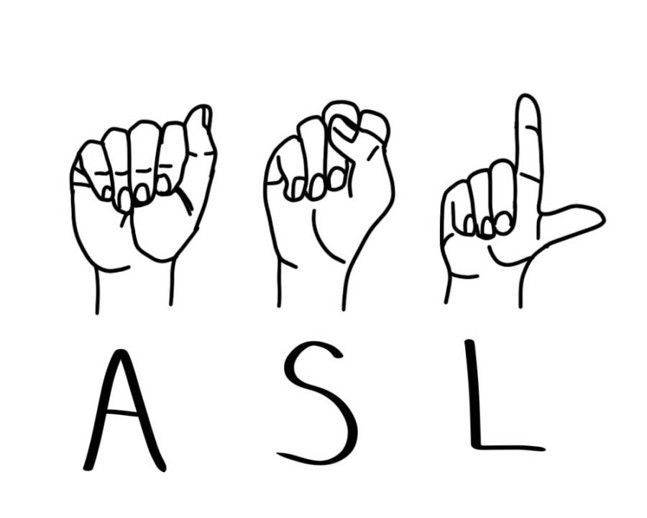
Question No. 1: As of 2021, what percent of the U.S. population are deaf or have serious difficulty hearing? 1.6% 2.6% 3.6% 4.6% 5.6% Question No. 2: How many deaf people live in the U.S. as of 2021? 3 million 5 million 7 million 9 million 11 million Question No. 3: Which of the following statements are false? A. Deaf persons do not want to speak or cannot speak. B. Every Deaf person knows ASL. C. ASL is English translated into signs. D. ASL is universal. E. ASL interpreters merely translate words. F. ASL is inferior to spoken language. G. Lip reading is a reliable or effective form of communication. H. ASL interpreters are unnecessary if a Deaf individual may write back and forth. Question No. 4: What federal and state laws require ASL services? Are you aware of the requirement of a written ASL policy and, if so, what a compliant policy looks like? If these questions are difficult, please review our PowerPoint: American Sign Language (ASL) & Fair Housing Requirements and the Sample ASL Nondiscrimination Policies (in Word format) available out our Services & Resources page. ________________________________ Answers: Question No. 1: 3.6% Question No. 2: 11 million Question No. 3: All of the statements are false. Question No. 4: What federal and state laws require ASL services? Americans With Disabilities Act of 1990; Section 504 of the Rehabilitation Act of 1973; Patient Protection and Affordable Care Act (commonly known as the Affordable Care Act or “ACA”); Fair Housing Amendments Act of 1988; and many state civil rights statutes .
By Steve Tomkowiak March 25, 2025
A prior post summarized the allegations in a federal court case that was filed after numerous incidents of alleged racial harassment that drove a Black family their Grosse Point Park home. Black Woman and Her Daughter Sue Former White Neighbor for KKK Flag Display and Other Threats . On March 21, 2025, U.S. District Court Judge Linda V. Parker, after carefully reviewing the allegations in the complaint and applicable law, entered an Opinion and Order Denying Defendant’s Motion to Dismiss. Judge Parker found that the complaint sufficiently alleged racial animus in violation of 42 U.S.C. § 1982. The facts are deplorable, as those who read the decision will no doubt notice, and embarrassing to our community. Congratulations to the students attorneys from the U of M Law School’s Civil Rights Litigation Initiative (CRLI) handling the litigation, under the fine leadership of long-time fair housing attorney and now U of M Law School Professor Mike Steinberg . Opinion and Order Denying Motion to Dismiss, Dinges v. Wilde, No. 23-12885 (E.D. Mich. Mar. 21, 2025)
By Steve Tomkowiak March 7, 2025
University of Michigan Law School Professor Michelle Adams ’ research interests include race discrimination, school desegregation, affirmative action, and housing law. Two of Professor Adams’ students, Michelle Landry and Victoria Pedri (pictured above) from Professor Adams’ Race, Law, and History course, developed a “ Detroit School Integration Timeline ”. The timeline traces the history from Detroit’s establishment of its first “colored school”, to the Dred Scott decision, the passage of the Civil Rights Act of 1875, the Great Migration, racially restrictive covenants, redlining, the Birwood (Eight Mile) Wall, white flight, the enactment of the Fair Housing Act, the Milliken v. Bradley decision and efforts to desegregate Detroit schools, through the recent decision in Students for Fair Admissions v. Harvard. The timeline is informative, user-friendly and includes many helpful videos. Congratulations to Michelle and Victoria for creating this amazing resource. Detroit School Integration Timeline Legal History Project: Detroit, Michigan (Law students Michelle Landry and Victoria Pedri briefly introduce themselves and thank viewers for checking out their timeline project)