Fair Housing Victory: Settlement Reached in Grosse Pointe Park Racial Harassment Case

FHCMD Staff • July 31, 2026

An FHCMD referral to University of Michigan Law School Civil Rights Litigation Initiative leads to a confidential settlement in a severe Grosse Pointe Park racial harassment case.

At the Fair Housing Center, our mission is to ensure that everyone has equal access to housing free from discrimination and racial hostility. We are extremely proud to share a recent victory achieved through our partnership with the Civil Rights Litigation Initiative (CRLI) at the University of Michigan Law School.


Recently, a housing discrimination complaint originally brought to the Fair Housing Center of Metropolitan Detroit reached a confidential settlement, bringing resolution to a harrowing experience for a local family.


A Pattern of Racial Harassment


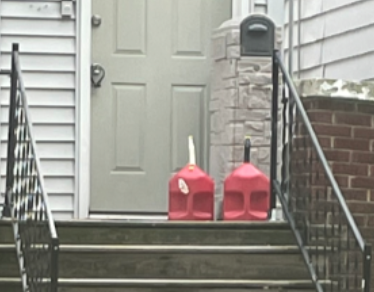
The case involved a Black mother and her family residing in Grosse Pointe Park, Michigan, who were subjected to severe racial harassment by their neighbor. The neighbor's behavior included leaving gas canisters out close to her property, staring, and hanging a Ku Klux Klan KKK flag in a window directly facing the family's home, less than 10 feet away.


The harassment was so extreme and intimidating that the family felt unsafe in their own home and was ultimately forced to move to a neighboring city.


Leveraging Reconstruction-Era Civil Rights Law


After the complaint came to us, we referred the case to the Civil Rights Litigation Initiative at U-M Law School. The legal team filed suit under 42 U.S. Code § 1982, a Reconstruction-era civil rights law enacted to ensure all citizens have the same rights as enjoyed by white citizens to inherit, purchase, lease, sell, hold, and convey real and personal property.


As a recent University of Michigan Law School article highlighted, this post-Civil War law was explicitly "designed to protect Black Americans from racially motivated threats from groups like the KKK."


Fair Housing Covers Neighbors, Too


This case serves as a critical reminder: fair housing laws cover the actions of neighbors, not just housing providers. Rental property owners and property managers are not the only entities that might violate federal fair housing laws; severe, racially motivated neighbor-on-neighbor harassment that interferes with an owner or tenant’s right to enjoy their home is also illegal.

While the terms of the resolution remain confidential, we are proud to have helped this family seek justice and hold discriminatory behavior accountable.


To learn more about this case and the legal strategy behind it, you can read the full overview on the University of Michigan Law School website.


By FHCMD Staff July 30, 2026
Understanding what discrimination looks like during the home purchase process and how to protect your rights with lenders, real estate agents, and sellers.
By FHCMD Staff July 28, 2026
Many of us will experience physical changes or cognitive decline as we age. Whether seeking new housing or living in a condo, apartment, rental housing, or even an assisted living facility or nursing home, seniors with disabilities are entitled to fair housing protections. According to the U.S. Centers for Disease Control and Prevention (CDC) , approximately 2 in 5 adults aged 65 and older experience disabilities that affect daily life. Vision or hearing loss, mobility impairment, chronic health conditions, and cognitive decline are more likely to occur or become more significant as people age. Ultimately, disabilities do not have to restrict a person's housing options. Understanding Accommodations and Modifications Disabled individuals, as well as family members and caregivers assisting them, can make requests for accommodations and physical modifications. Common examples include: Physical Modifications: Installing grab bars, raising toilet seat heights, or adding visual safety features like flashing lights connected to fire alarms for individuals with hearing impairments. Rule and Policy Adjustments: Reserved parking space, granting a move to a lower floor, or permitting a live-in caregiver. Communication Support: Sign language interpretation or auxiliary aids. When a resident makes a request, a housing provider may ask for documentation from a healthcare provider linking the disability to the requested accommodation or modification. Housing providers must generally grant these requests as long as they do not impose an excessive cost or unreasonable burden. Housing providers should be mindful of ways that make the accommodation process as accessible as possible. Tenants who are not tech-savvy or who may be experiencing cognitive decline may have challenges completing an online form or using an app. Remaining proactive and offering alternative methods if a resident appears to be struggling with an accommodation process will help ensure that your accommodation and modification request process is accessible. Who Pays for Modifications? Responsibility for modification costs depends on the type of housing. While residents in market-rate housing are generally responsible for funding physical modifications, those living in subsidized or low-income senior communities may not have to pay. Landlords who receive federal financial assistance are required to fund approved reasonable modifications for residents with disabilities. (For a deeper dive into making requests, read our article: Fair Housing Rights: Knowing Your Options for Disability Accommodations and Modifications ) We Are Here to Help You don't have to navigate housing accommodation and modification requests alone—we're here to help. Contact us through our website or give us a call at 313-579-FAIR (3247) to discuss fair housing rights and questions, receive support with addressing possible fair housing law violations, or to receive help in requesting disability accommodations and modifications.
July 21, 2026
Identifying Sexual Harassment in Housing
By FHCMD Staff July 14, 2026
What Every Tenant Should Know
By Gabby Cannon July 9, 2026
Fifth annual event rallies almost two hundred supporters for equal housing opportunity.
By Steve Tomkowiak December 2, 2025
Lisa joined the Center after nearly 30 years of experience as a wheelchair user and close to 17 years advocating for the rights of people with disabilities. In 2008, Lisa founded Warriors on Wheels of Metropolitan Detroit (“WOW”) and currently serves as its Executive Director and CEO. Through WOW, Lisa focuses on disability rights, accessibility, and community engagement. In these efforts, Lisa not only seeks to meet the critical needs for civic access and passageways, affordable housing units, and safe, reliable transportation, but strives to transform these accessibility points into cohesive design visions that impact communities for a better tomorrow. As Lisa puts it, she “makes it a priority to impact the urban communities in the cities of Detroit, Highland Park, Hamtramck, and Dearborn on compliance with the ADA and other laws, not just technically, but addressing human spirit, morals, and values.” Lisa’s civic involvement and service are broad and varied, ranging from her service on the State of Michigan’s Barrier Free Design Board for Accessibility to her services on the Regional Transit Authority of Southeast Michigan and the City of Detroit’s Human Rights Commission. In recent years, 50-60% or more of the Center’s complaints involve claims of discrimination against persons with disabilities. The Center has assisted and initiated numerous enforcement actions involving disability discrimination. The Center’s Board and Staff welcome the valuable perspective and expertise that Lisa will bring as a new Board member.
By Steve Tomkowiak August 26, 2025
Our friends at the Grosse Pointe Board of Realtors (GPBR) have invited everyone to join them at a chili cookoff event on October 15, 2025, from 11 a.m. to 1 p.m., at The Rivers of Grosse Pointe, 900 Cook Rd, Grosse Pointe Woods, MI 48236 . The GPBR has asked the Center to take a few minutes to explain why fair housing remains so important today. The competition will be fierce. The chili promises to be insanely good. This should be a lot of fun. Please take a short lunch break from your busy schedule to join us.
By Steve Tomkowiak July 31, 2025
Our lack of understanding impacts our ability to address the problem of homelessness
By Steve Tomkowiak July 14, 2025
Question No. 1: As of 2021, what percent of the U.S. population are deaf or have serious difficulty hearing? 1.6% 2.6% 3.6% 4.6% 5.6% Question No. 2: How many deaf people live in the U.S. as of 2021? 3 million 5 million 7 million 9 million 11 million Question No. 3: Which of the following statements are false? A. Deaf persons do not want to speak or cannot speak. B. Every Deaf person knows ASL. C. ASL is English translated into signs. D. ASL is universal. E. ASL interpreters merely translate words. F. ASL is inferior to spoken language. G. Lip reading is a reliable or effective form of communication. H. ASL interpreters are unnecessary if a Deaf individual may write back and forth. Question No. 4: What federal and state laws require ASL services? Are you aware of the requirement of a written ASL policy and, if so, what a compliant policy looks like? If these questions are difficult, please review our PowerPoint: American Sign Language (ASL) & Fair Housing Requirements and the Sample ASL Nondiscrimination Policies (in Word format) available out our Services & Resources page. ________________________________ Answers: Question No. 1: 3.6% Question No. 2: 11 million Question No. 3: All of the statements are false. Question No. 4: What federal and state laws require ASL services? Americans With Disabilities Act of 1990; Section 504 of the Rehabilitation Act of 1973; Patient Protection and Affordable Care Act (commonly known as the Affordable Care Act or “ACA”); Fair Housing Amendments Act of 1988; and many state civil rights statutes .
By Steve Tomkowiak March 25, 2025
A prior post summarized the allegations in a federal court case that was filed after numerous incidents of alleged racial harassment that drove a Black family their Grosse Point Park home. Black Woman and Her Daughter Sue Former White Neighbor for KKK Flag Display and Other Threats . On March 21, 2025, U.S. District Court Judge Linda V. Parker, after carefully reviewing the allegations in the complaint and applicable law, entered an Opinion and Order Denying Defendant’s Motion to Dismiss. Judge Parker found that the complaint sufficiently alleged racial animus in violation of 42 U.S.C. § 1982. The facts are deplorable, as those who read the decision will no doubt notice, and embarrassing to our community. Congratulations to the students attorneys from the U of M Law School’s Civil Rights Litigation Initiative (CRLI) handling the litigation, under the fine leadership of long-time fair housing attorney and now U of M Law School Professor Mike Steinberg . Opinion and Order Denying Motion to Dismiss, Dinges v. Wilde, No. 23-12885 (E.D. Mich. Mar. 21, 2025)