Michigan Supreme Court Holds that Expert Witness Testimony Is Not Required for a Reasonable Accommodation

Steve Tomkowiak • December 1, 2022

The Fair Housing Act and the Michigan Persons with Disabilities Civil Rights Do Not Require Expert Witness Testimony

As a follow up to earlier posts on the Riverbrook v. Fabode case, the Michigan Supreme Court, in an order dated November 29, 2022, held that expert witness testimony is not required in all cases in which a person with a disability seeks a reasonable accommodation under Section 804(f)(3)(B) of the Fair Housing Act (FHA), 42 U.S.C. § 3604(f)(3)(B), or Section 506a of the Michigan Persons with Disabilities Civil Rights Act (PWDCRA), M.C.L. § 37.1506a(1)(b). 


The Supreme Court vacated the Court of Appeals' judgment to the extent that it could be read as requiring expert witness testimony. According to the Court, "the [FHA and PWDCRA] contain no such requirement." 


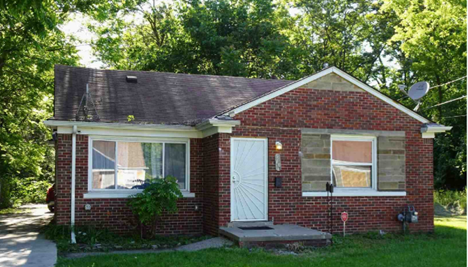
This is a great result. As previously noted, persons with disabilities, especially tenants with disabilities who are unable except in rare instances to afford counsel, cannot afford the added expense of retaining a qualified expert witness to provide a disability certification. The Riverbrook v. Fabode case originated in a mobile home park in New Haven, Michigan. (A Google Earth photo of a portion of the mobile home park is shown at the top.) The case made its way through 4 Michigan courts (42-2 District Court, Macomb County Circuit Court, Michigan Court of Appeals, and Michigan Supreme Court). The mobile home part, Riverbrook, had legal representation in all four courts. In contrast, Abimbola Fabode and her brother, Antony Fabode, did not have legal representation until after the Court of Appeals' published decision. The Fair Housing Center represented the Fabodes without charge in filing a motion for reconsideration with the Court of Appeals and in all proceedings before the Michigan Supreme Court. The Center also filed with the 42-2 District Court a successful motion to vacate an order of eviction.   


The Supreme Court did not expressly address the Fair Housing Center's request that the Court order lower courts on remand to give deference to HUD's assistance animal guidance. FHEO-2020-1, Assessing a Person’s Request to Have an Animal as a Reasonable Accommodation Under the Fair Housing Act (Jan. 28, 2020) ("HUD's 2020 Assistance Animals Guidance"). The Supreme Court, however, cited the federal court of appeals' unpublished decision in Overlook Mut. Homes, Inc. v. Spencer, 415 Fed. App'x 617 (6th Cir. 2011).  In Overlook Mut. Homes, Inc., the Sixth Circuit quoted from the Joint Statement of the Department of Housing and Urban Development and the Department of Justice, Reasonable Accommodations Under the Fair Housing Act (May 17, 2004)("HUD/DOJ Joint Statement").  415 Fed. App'x at 8-9 & n.3. As such, it would appear consistent with Overlook Mut. Homes, Inc. for the lower courts on remand--and Michigan courts generally--in evaluating disability certifications to consider the HUD/DOJ Joint Statement, as well as HUD's 2020 Assistance Animals Guidance issued after the Overlook Mut. Homes, Inc. decision.     


While further proceedings will take place on remand, the Michigan Supreme Court's order is very good news for Michigan residents with disabilities who need reasonable accommodations as to their housing. 


The Fabodes and the Center appreciate the outstanding amici briefs filed by the Michigan Civil Rights Commission and the Michigan Department of Civil Rights (authored by Dana Nessel, Attorney General, Fadwa A. Hammoud, Solicited General, and Tonya Celeste Jeter and Ron D. Robinson, Assistant Attorney Generals) and the amici briefs filed by the Fair Housing Centers of Southeast and Mid-Michigan, West Michigan, and Southwest Michigan (authored by Beth M. Rivers and Robin B. Wagner, of Pitt McGehee Palmer Bonanni & Rivers).  


By Steve Tomkowiak December 2, 2025
Lisa joined the Center after nearly 30 years of experience as a wheelchair user and close to 17 years advocating for the rights of people with disabilities. In 2008, Lisa founded Warriors on Wheels of Metropolitan Detroit (“WOW”) and currently serves as its Executive Director and CEO. Through WOW, Lisa focuses on disability rights, accessibility, and community engagement. In these efforts, Lisa not only seeks to meet the critical needs for civic access and passageways, affordable housing units, and safe, reliable transportation, but strives to transform these accessibility points into cohesive design visions that impact communities for a better tomorrow. As Lisa puts it, she “makes it a priority to impact the urban communities in the cities of Detroit, Highland Park, Hamtramck, and Dearborn on compliance with the ADA and other laws, not just technically, but addressing human spirit, morals, and values.” Lisa’s civic involvement and service are broad and varied, ranging from her service on the State of Michigan’s Barrier Free Design Board for Accessibility to her services on the Regional Transit Authority of Southeast Michigan and the City of Detroit’s Human Rights Commission. In recent years, 50-60% or more of the Center’s complaints involve claims of discrimination against persons with disabilities. The Center has assisted and initiated numerous enforcement actions involving disability discrimination. The Center’s Board and Staff welcome the valuable perspective and expertise that Lisa will bring as a new Board member.
By Steve Tomkowiak August 26, 2025
Our friends at the Grosse Pointe Board of Realtors (GPBR) have invited everyone to join them at a chili cookoff event on October 15, 2025, from 11 a.m. to 1 p.m., at The Rivers of Grosse Pointe, 900 Cook Rd, Grosse Pointe Woods, MI 48236 . The GPBR has asked the Center to take a few minutes to explain why fair housing remains so important today. The competition will be fierce. The chili promises to be insanely good. This should be a lot of fun. Please take a short lunch break from your busy schedule to join us.
By Steve Tomkowiak July 31, 2025
Our lack of understanding impacts our ability to address the problem of homelessness
By Steve Tomkowiak July 14, 2025
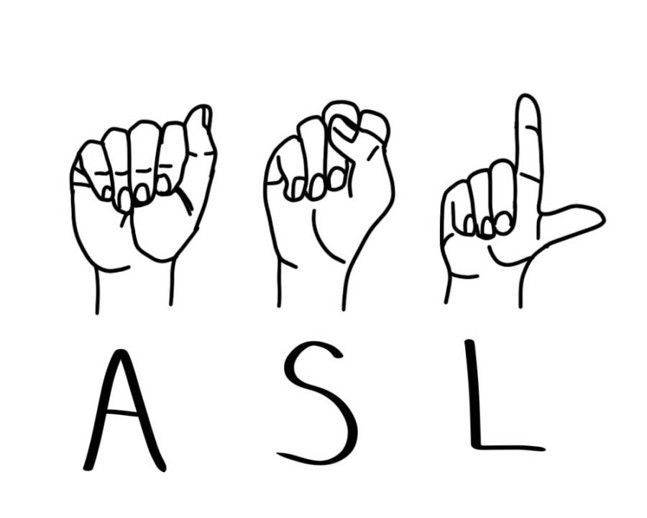
Question No. 1: As of 2021, what percent of the U.S. population are deaf or have serious difficulty hearing? 1.6% 2.6% 3.6% 4.6% 5.6% Question No. 2: How many deaf people live in the U.S. as of 2021? 3 million 5 million 7 million 9 million 11 million Question No. 3: Which of the following statements are false? A. Deaf persons do not want to speak or cannot speak. B. Every Deaf person knows ASL. C. ASL is English translated into signs. D. ASL is universal. E. ASL interpreters merely translate words. F. ASL is inferior to spoken language. G. Lip reading is a reliable or effective form of communication. H. ASL interpreters are unnecessary if a Deaf individual may write back and forth. Question No. 4: What federal and state laws require ASL services? Are you aware of the requirement of a written ASL policy and, if so, what a compliant policy looks like? If these questions are difficult, please review our PowerPoint: American Sign Language (ASL) & Fair Housing Requirements and the Sample ASL Nondiscrimination Policies (in Word format) available out our Services & Resources page. ________________________________ Answers: Question No. 1: 3.6% Question No. 2: 11 million Question No. 3: All of the statements are false. Question No. 4: What federal and state laws require ASL services? Americans With Disabilities Act of 1990; Section 504 of the Rehabilitation Act of 1973; Patient Protection and Affordable Care Act (commonly known as the Affordable Care Act or “ACA”); Fair Housing Amendments Act of 1988; and many state civil rights statutes .
By Steve Tomkowiak March 25, 2025
A prior post summarized the allegations in a federal court case that was filed after numerous incidents of alleged racial harassment that drove a Black family their Grosse Point Park home. Black Woman and Her Daughter Sue Former White Neighbor for KKK Flag Display and Other Threats . On March 21, 2025, U.S. District Court Judge Linda V. Parker, after carefully reviewing the allegations in the complaint and applicable law, entered an Opinion and Order Denying Defendant’s Motion to Dismiss. Judge Parker found that the complaint sufficiently alleged racial animus in violation of 42 U.S.C. § 1982. The facts are deplorable, as those who read the decision will no doubt notice, and embarrassing to our community. Congratulations to the students attorneys from the U of M Law School’s Civil Rights Litigation Initiative (CRLI) handling the litigation, under the fine leadership of long-time fair housing attorney and now U of M Law School Professor Mike Steinberg . Opinion and Order Denying Motion to Dismiss, Dinges v. Wilde, No. 23-12885 (E.D. Mich. Mar. 21, 2025)
By Steve Tomkowiak March 7, 2025
University of Michigan Law School Professor Michelle Adams ’ research interests include race discrimination, school desegregation, affirmative action, and housing law. Two of Professor Adams’ students, Michelle Landry and Victoria Pedri (pictured above) from Professor Adams’ Race, Law, and History course, developed a “ Detroit School Integration Timeline ”. The timeline traces the history from Detroit’s establishment of its first “colored school”, to the Dred Scott decision, the passage of the Civil Rights Act of 1875, the Great Migration, racially restrictive covenants, redlining, the Birwood (Eight Mile) Wall, white flight, the enactment of the Fair Housing Act, the Milliken v. Bradley decision and efforts to desegregate Detroit schools, through the recent decision in Students for Fair Admissions v. Harvard. The timeline is informative, user-friendly and includes many helpful videos. Congratulations to Michelle and Victoria for creating this amazing resource. Detroit School Integration Timeline Legal History Project: Detroit, Michigan (Law students Michelle Landry and Victoria Pedri briefly introduce themselves and thank viewers for checking out their timeline project)
By Steve Tomkowiak December 10, 2024
The Livonia Housing Commission has announced the opening of its Housing Choice Voucher (HVC) waiting list. To apply successfully, you need to provide the Commission with the following information: The first and last names of all members of your household The Social security numbers and birthdates of all members of your household. Total gross annual income of everyone in your household. This includes wages, child support, Social Security, Supplemental Security Income (SSI), General Assistance and Unemployment Income. A valid mailing address and email address. Only one application is permitted per household. Accurate information must be submitted in order to contact applicants if they are selected in the lottery. How to Apply Use this link to start the application process. At the bottom of the page, click Get Started . Persons with disabilities who require accommodations with the online waitlist application, may call the Livonia Housing Commission at (734) 634-0294 or send an email to kwesley@livonia.gov . (If you do not have the social security numbers, please contact the Fair Housing Center by phone at 313-579-3247 or by email to info@fairhousingdetroit.org.)
By Steve Tomkowiak November 13, 2024
Our down payment program has been a great success. A total of 11 families are now owners of new homes: 1. Nen Detroit $1,545 2. Shi'Toya Detroit $5,268 3. Alma Detroit $2,056 4. Danielle Detroit $4,494 5. Demetrius Detroit $5,048 6. Danyelle Warren $9,845 7. Crystal Detroit $10,000 8. Michael Detroit $4,293 9. Demario & Lavontae Detroit $9,136 10. Sharmika Detroit $8,380 11. Crystal Detroit $5,400
By Steve Tomkowiak September 21, 2024
We are very pleased to have helped these new home buyers: Nen Detroit $1,545 Shi'Toya Detroit $5,268 Alma Detroit $2,056 Danielle Detroit $4,494 Demetrius Detroit $5,049 Danyelle Warren $9,845 Crystal Detroit $10,000 Funds are limited. If you need assistance, please contact us or have your lender contact us right away.
By Steve Tomkowiak August 30, 2024
Yes, but the policy must be carefully reviewed.